

Cancún is one of those rare destinations that genuinely delivers for everyone — whether you're arriving as a wide-eyed first-timer, travelling with kids, hunting for the quietest stretch of Caribbean sand, or determined to eat well as a vegan without spending half your holiday googling restaurants. It has beautiful beaches, ancient Mayan ruins, vast underwater sculpture parks, wild cenotes, and a downtown that most resort guests never see.
This guide is organised by traveler type, so you can skip straight to what matters for your trip. Each section includes vegan-friendly notes, because Cancún has far more plant-based options than most people expect — you just need to know where to look.
Check out our other Cancún guides to the best vegan friendly resorts in Cancun and the best vegan restaurants in Cancun.
First-time visitors
If this is your first trip to Cancún, the temptation is to spend the whole time by the resort pool. Resist it, at least for a few days. The city's greatest experiences are the ones that pull you beyond the Hotel Zone.

Visit Chichen Itza
Two and a half hours west of Cancún by road, Chichen Itza is one of the New Seven Wonders of the World and the most visited archaeological site in Mexico. The Temple of Kukulkán, the main pyramid, is so precisely positioned that during the spring and autumn equinoxes, a shadow in the shape of a serpent appears to slither down its northern staircase. Even without an equinox, it's extraordinary.
Plan to arrive at opening time (8am) to beat both the crowds and the heat. Tour operators in Cancún offer all-day packages that typically include transport, a guide, lunch, and a cenote stop on the way back - a popular combination and genuinely good value.
🌱 Vegan note: The on-site restaurant at Chichen Itza has a buffet with plentiful vegan options - rice, beans, grilled vegetables, tortillas, and fresh fruit. Ask staff to identify dishes cooked without lard (manteca). Outside the main gate, vendors sell fresh coconut water and fruit.

Swim in a cenote
Cenotes are natural sinkholes formed when the Yucatán Peninsula's limestone bedrock collapses to reveal freshwater pools beneath. The region has over 6,000 of them, and no trip to Cancún is complete without swimming in at least one.
For a curated selection in a single day, follow the Ruta de Cenotes - a scenic route about 25km west of Puerto Morelos that includes Verde Lucero, La Noria, Selvatica, and Mojarras. Each cenote has a distinct character: some are open-air pools flooding with light, others are cave systems with shafts of sunlight cutting through the dark. Cenote Dos Ojos (about 120km south) is considered one of the finest cave-diving sites in the world.
🌱 Vegan note: Most cenote tours are self-catering or BYO snacks. Pack your own food - facilities are usually minimal. The experience itself is cruelty-free and deeply connected to the natural world the Maya held sacred.
Take a day trip to Isla Mujeres
Twenty minutes by ferry from the Hotel Zone, Isla Mujeres operates at a completely different pace. The main beach, Playa Norte, has shallow turquoise water so calm you can wade out 50 meters and still be knee-deep. Rent a golf cart to explore the southern tip of the island - Punta Sur has clifftop views, a small Mayan temple dedicated to the goddess Ixchel, and the spot where the sun first touches Mexican soil each morning.
The ferry runs from Puerto Juárez (the most direct crossing) or from Playa Tortugas in the Hotel Zone.
🌱 Vegan note: Isla Mujeres has several plant-forward cafés in its downtown. Look for fresh ceviche de verduras (vegetable ceviche), aguachile de champiñones, and classic rice-and-bean plates. The central market area near the main plaza has vendors selling fresh tropical fruit throughout the day.
Explore the Hotel Zone - and then leave it
The Hotel Zone (Zona Hotelera) is a 22km strip of resorts, beaches, restaurants, and nightlife running along Boulevard Kukulcán. Walking or taking the R1/R2 bus along its length gives a feel for the city's scale and variety. But the authentic Cancún is in El Centro - the downtown area, about 15 minutes by bus, where Cancunenses actually live, shop, and eat. Most visitors never go there. You should.
Families with children
Cancún is one of the most family-friendly destinations in Mexico, but the right experience depends entirely on how old your children are.
For young children (under 7): north-facing beaches only
Here's the one geographic fact that makes or breaks a Cancún family beach day. The Hotel Zone's beaches face two different bodies of water. Beaches on the north leg (km 1–9) - including Playa Las Perlas (km 2.5), Playa Langosta (km 5), and Playa Tortugas (km 6.5) - face the sheltered Bahía de Mujeres. The water is calm, shallow, and safe for young children.
Beaches on the east leg (km 10–22), including Playa Marlin and Playa Delfines, face the open Caribbean and can have waves of up to five meters. They are not suitable for young children regardless of how beautiful they look.
Playa Tortugas (km 6.5) is the best-equipped public family beach: calm water, jet ski and diving rentals, beach volleyball, a nearby playground, and food vendors. Arrive before 10am to secure free parking.

For children aged 6–12: Xcaret Park and sea turtle snorkeling
Xcaret Park is a full-day eco-cultural theme park about 45 minutes south of Cancún (near Playa del Carmen). It includes underground rivers, coral reef snorkeling, a butterfly pavilion, Mayan village and ruins, a jaguar island, and an evening show with 300 performers representing Mexican history. It's expensive but genuinely delivers a full day and evening for families.
For a more intimate wildlife encounter, Akumal (about 80km south) is a sheltered bay where green sea turtles come to feed on seagrass. Snorkeling with them in their natural habitat - not in an enclosure - is one of the most memorable experiences available in the region.
🌱 Vegan note: Xcaret has multiple food outlets; ask specifically for plant-based options at each station - rice, beans, grilled vegetables, and fresh fruit are available throughout the park. The animal encounters here (butterfly pavilion, river snorkeling) are wildlife-centred rather than performance-based.
For teenagers: adventure parks and night experiences
Xplor Fuego is the night version of the Xplor adventure park - illuminated caves, zip lines in the dark, and amphibious vehicles through jungle tracks with sparklers and fire lighting the course. It starts at sunset and runs until around midnight. For teenagers who find daytime parks too gentle, this is a genuine adrenaline hit.
For all ages: kayaking in Nichupté Lagoon
The Nichupté Lagoon sits between the Hotel Zone and the mainland - a vast mangrove ecosystem that most Hotel Zone visitors never see. Kayaking tours take you through winding mangrove channels where you're likely to spot herons, egrets, iguanas, and baby crocodiles from a safe distance. The pace is gentle enough for older children and the wildlife density is remarkable for somewhere this close to a major resort strip.
🌱 Vegan note: A fully ethical nature activity - no captive animals, no feeding, just guided observation of the lagoon in its natural state.
Couples and honeymooners

Sunset catamaran to Isla Mujeres
Most tour operators run catamaran cruises to Isla Mujeres that include snorkeling at El Farito reef, time on the island, and a return journey timed for sunset. Alcohol and food are typically included; confirm with your operator whether plant-based food options are available when booking.
JOYÀ by Cirque du Soleil - Vidanta Resort
Latin America's first resident Cirque du Soleil production is staged at the Vidanta Resort, about 20 minutes from the Hotel Zone. The show combines acrobatics, original music, and a storyline inspired by Mexican mythology - and uniquely, it's designed to be experienced alongside a multi-course dinner or champagne service. Ticket packages range from show-only to full culinary experiences.
🌱 Vegan note: Contact Vidanta directly when booking to request a plant-based menu. They accommodate dietary requirements with advance notice.
Sunrise at Isla Blanca
About 25km north of the Hotel Zone, Isla Blanca is a narrow, largely untouched sandbank with the Caribbean Sea on one side and Laguna Chacmochuk on the other. This is what Cancún looked like before the 1970s resort development began. Arrive at dawn for a completely empty beach and a sunrise unlike anything in the Hotel Zone. Bring your own food and water; the Punta Blanca beach club serves simple food and drinks if you stay into the morning.
Isla Blanca is also the best kitesurfing location near Cancún - Shaka Vibes offers lessons and equipment rental.
Temazcal ceremony
A temazcal is a traditional pre-Hispanic steam ceremony conducted inside a low, dome-shaped structure using volcanic rocks heated over fire, infused with medicinal herbs. It combines physical and ceremonial elements rooted in Mayan and Aztec traditions. Several resorts and independent operators in Cancún offer authentic versions guided by local ceremony leaders.
🌱 Vegan note: Inherently plant-based - the ceremony uses herbs, copal incense, and steam. No animal products involved.

Bioluminescent snorkeling
Some tour operators run evening snorkeling in areas where bioluminescent organisms light up the water around you as you move. Availability and intensity depends on season and conditions - ask specifically when booking.
Culture and history travelers
Museo Maya de Cancún and San Miguelito ruins
Most visitors to Cancún don't know there's a first-rate archaeological museum inside the Hotel Zone, adjacent to Playa Delfines. The Museo Maya de Cancún houses one of the most important collections of Mayan artifacts in Mexico across three exhibition halls. Immediately behind the museum is the San Miguelito Archaeological Zone - a genuine Mayan city site with pyramids and platforms you can explore, right in the Hotel Zone.
Entry costs around 75 pesos and is reportedly free on Sundays. Allow 2–3 hours for both.
El Meco and El Rey archaeological sites
Two smaller Mayan sites sit within or immediately adjacent to the Hotel Zone and rarely appear on tourist itineraries.
El Rey (km 18) is a compact ceremonial site with multiple platforms and a pyramid, located within the Hotel Zone itself. It's also famous for its resident iguana population - the ruins are covered in them.
El Meco sits about 6km north of the Hotel Zone near Puerto Juárez and features Cancún's tallest pyramid alongside several plazas. It's rarely visited and almost entirely crowd-free.

Tulum ruins
About 130km south of Cancún (roughly 90 minutes by car), the Tulum ruins are the most dramatically positioned Mayan site in the region - a walled city perched on a cliff 12 meters above the Caribbean Sea. After exploring the temples, walk down to the private beach below for a swim in spectacular water.
🌱 Vegan note: Like Chichen Itza, Tulum has a restaurant at the entrance with a buffet; vegan options are available. Beach vendors at the base sell fresh coconuts and fruit.

Cobá ruins
About 100km from Cancún, Cobá is the Yucatán's largest temple pyramid complex and uniquely allows visitors to explore its spread-out jungle ruins by rented bicycle. The scale is entirely different from Tulum - the site covers several square kilometers of dense jungle, and cycling between structures adds genuine adventure to the visit.
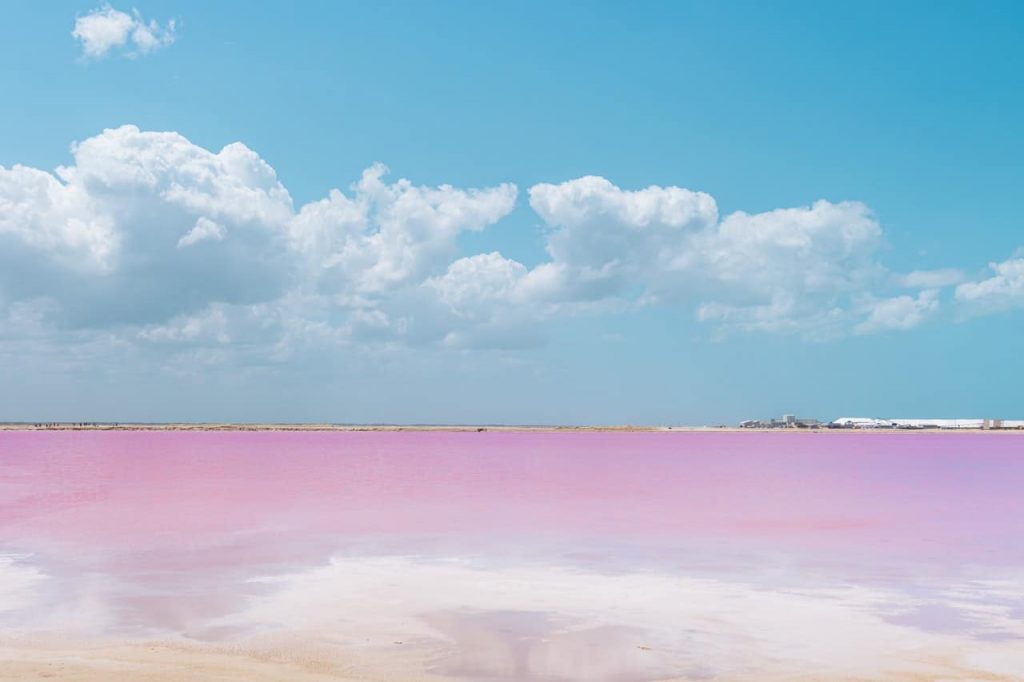
Las Coloradas pink lake
About 2.5 hours north of Cancún in Yucatán state, Las Coloradas is home to a startlingly pink salt lake. The color comes from high concentrations of red algae, brine shrimp, and halophilic bacteria in the shallow water. The surrounding area is quiet, genuinely beautiful, and home to wild flamingos that feed in the flats around dusk.
Mercado 23 - the market tourists miss
Mercado 23 is where Cancunenses actually shop for food, not souvenirs. It's raw and authentic - fresh produce, dried chilies, spices, and street food stalls serving the city's workers. Mercado 28 (a short distance away) is the tourist-facing version with handicrafts and aggressive bargaining. Both are worth visiting; they're completely different experiences.
🌱 Vegan note: Mercado 23 is excellent for plant-based eating. Fresh produce, beans, tortilla vendors, and corn-based street snacks like esquites and elotes are everywhere. Ask for elotes sin mayo, sin queso for a straightforwardly vegan version.
Parque de las Palapas - downtown Cancún at its best
In the heart of El Centro, this central park comes alive at sundown when food vendors set up stalls, musicians perform, and families gather. It's the most authentically Cancunense free experience in the city, and it costs nothing.
🌱 Vegan note: Excellent for vegans. Look for: esquites (corn with lime and chili - ask for no cheese or mayo), marquesitas (crisp crêpes - request just sugar or jam instead of the cheese filling), fresh fruit cups with tajín, and agua fresca. All easily adapted plant-based.
Mexican cooking class
Several operators run classes that start at a local market and end in a kitchen cooking Yucatecan dishes. It's one of the best ways to understand the region's food culture.
🌱 Vegan note: This is worth booking in advance as a specifically plant-based class. The foundations of Yucatecan cooking - achiote paste, habanero salsa, black beans, handmade tortillas, fresh salsas, agua de jamaica - are almost entirely plant-based. A growing number of Cancún operators now offer vegan-focused cooking experiences; ask directly when inquiring.
Adventure and nature seekers
Whale shark tours (May–September only)
From late May to mid-September, whale sharks congregate in the waters near Isla Mujeres and Isla Contoy to feed on fish spawn. These are the largest fish on the planet - typically 6–9 meters long - and swimming alongside them in the open ocean is one of the most extraordinary wildlife encounters available anywhere in the region.
Tours depart early morning and involve a boat journey of 40–90 minutes, followed by short snorkeling sessions in the water alongside the sharks. The experience is regulated: guides keep groups small, prohibit touching, and maintain safe distance. This is one of the most ethically straightforward wildlife experiences in Cancún - wild animals, natural behavior, observation only.
🌱 Vegan note: Wild animals in their natural habitat, completely unharmed. Choose operators who enforce no-touch protocols and limit group sizes. Most reputable operators also photograph participants in the water - a useful check on how close they really let people get.
Swim with sea turtles at Akumal
The sheltered bay at Akumal (about 80km south) is one of the most reliable places in the world to snorkel alongside wild green sea turtles grazing on seagrass. Tours provide equipment and guide you to the feeding areas. The turtles are wild, free, and unconfined.
🌱 Vegan note: This is an ethical, observation-only encounter in a natural setting - a wildlife experience most vegans will feel completely comfortable with.
Cancún Underwater Museum (MUSA)
The Museo Subacuático de Arte is an ongoing art installation: over 500 sculptures submerged off the coasts of Cancún and Isla Mujeres, made from pH-neutral cement specifically designed to promote coral growth. They've become a functioning artificial reef over the years. View them by scuba diving (the Manchones site, 8–10 meters deep, near Isla Mujeres), snorkeling (Punta Nizuc, shallower), or glass-bottom boat.
Isla Contoy - national park day trip
About 30km north of Isla Mujeres, Isla Contoy is an uninhabited national park accessible only by authorised boat tour. It's home to over 150 bird species and serves as a nesting site for sea turtles. Tour numbers are capped by the government to protect the ecosystem. Pack your own food - there are no facilities on the island.
🌱 Vegan note: One of the most ecologically intact day-trip destinations available from Cancún, ideal for nature-focused and eco-conscious travelers.
Scuba diving
The Mesoamerican Barrier Reef - the second-largest coral reef system on the planet - runs the full length of the Yucatán coast. Multiple PADI-certified dive shops in the Hotel Zone offer discover dives for beginners and open-water sites for certified divers. Key sites include Punta Nizuc (shallow, good for beginners) and the cave systems further south near Puerto Morelos.
ATV jungle tours and zip lines
The Ruta de Cenotes (about 25km west of Puerto Morelos) and the surrounding jungle parks offer combinations of ATV riding through jungle trails, multi-line zip circuits, and cenote swims. Selvatica is the most established operator in the area. Xavage Park in Cancún itself offers zip lining, ATV riding, and a kayaking river circuit.
Lizard and crocodile spotting - completely free
This is an activity that most visitors miss entirely. Walk the lagoon-side path along Boulevard Kukulcán and keep your eyes on the water's edge. Iguanas are everywhere - they're densest at El Rey ruins (km 18) and at Playa Delfines, where they sun themselves on the sand. Baby crocodiles can sometimes be spotted from the roadside paths near the Nichupté Lagoon. No tour, no fee.

Stand-up paddleboarding
SUP board hire is available at multiple Hotel Zone beach clubs, particularly in the calmer water of the km 4–9 stretch. The flat lagoon water on the Nichupté side is ideal for paddleboarding early morning before the wind builds.
Budget travelers
Cancún has a reputation for being expensive. That reputation belongs almost entirely to the Hotel Zone bubble. Step outside it and costs drop dramatically.
What's free
All beaches in Mexico are legally public - no resort can restrict sand access. Playa Delfines (km 18) is the most spectacular and has free palapas and free parking (arrive before 9am on weekends). El Rey ruins (km 18) charge minimal entry and are home to the city's best iguana-spotting. Parque de las Palapas is free every evening. The Malecón Tajamar is a free waterfront walkway along the lagoon.
Cheapest transport: the R1/R2 bus
Runs continuously along Boulevard Kukulcán from the Hotel Zone through El Centro. Fare: approximately 12 pesos (around £0.50 / $0.60). The most efficient way to get between the hotel zone and downtown. Buses run every 5 minutes.
Budget-friendly culture
Museo Maya de Cancún - 75 pesos (reportedly free on Sundays) for the museum plus San Miguelito ruins. El Rey ruins - low entry fee, no queues, iguanas everywhere. El Centro food tour on foot - eat at Mercado 23, Parque de las Palapas, and the street stalls on Avenida Tulum for a fraction of Hotel Zone prices.
🌱 Vegan note: Budget Cancún is genuinely excellent for vegans. Street food at the markets and parks - esquites, fruit cups, fresh tortillas with beans, agua fresca - costs almost nothing. Mercado 23 is your best resource for cheap, filling, plant-based meals in the city.
When to go: seasonal highlights
| Period | Conditions | Best for |
|---|---|---|
| December–April | Dry season, 26–30°C, low humidity | Best overall weather; peak crowds Dec–March |
| February | Warm, quieter | Carnival in Cozumel; lower prices |
| May–mid September | Hot, afternoon showers | Whale shark tours - the only window |
| June–October | Hot, humid | Sea turtle nesting at Akumal; Isla Contoy bird season |
| August–October | Hurricane season peak | Higher risk of storms; heaviest sargassum period |
| November | Cooling, quieter | Excellent value; thin crowds; improving weather |
| Late Nov–mid Dec | Shoulder season | Good prices and weather before Christmas crowds |
On sargassum: Brown seaweed drifting onto Caribbean beaches is a genuine planning consideration. Peak season runs April–October. North-facing Hotel Zone beaches (km 1–9: Tortugas, Langosta) are less exposed than east-facing ones (Delfines, Marlin). Isla Mujeres' Playa Norte and Isla Blanca are the most reliably sheltered, low-risk options. Check mexsea.io (72-hour forecast) or the Red de Monitoreo del Sargazo Cancún Facebook group for real-time conditions before beach days.
Visiting during rainy season (May–October)? Rain in Cancún is usually just a brief afternoon shower, but it's worth having a backup plan - we've got a full guide to things to do in Cancún when it rains.
Safety and logistics
When you exit customs at Cancún airport, you'll walk through a corridor of friendly, well-dressed people offering tourist help, free shuttles, and tour discounts. Almost all are timeshare representatives. This is known locally as the "shark tank." Keep walking, say "no gracias," and don't stop until you're outside the terminal. Pre-book your airport transfer before traveling - your hotel can usually arrange this.
Beach flag colors
- 🟢 Green: Safe to swim
- 🟡 Yellow: Caution - swim carefully
- 🔴 Red: Dangerous - no swimming
- ⬛ Black: Extreme danger - stay out of the water
Playa Delfines and Playa Marlin regularly fly red or yellow flags due to strong currents and open Caribbean exposure. These flags are enforced by lifeguards and should be taken seriously.
The Mercado 28 double tip
A known practice at some Mercado 28 restaurants: a 20% service charge is included in the bill in small print, leaving the tip line blank - hoping you add another 20%. Check your bill carefully before paying.
Uber logistics
Uber is available in Cancún but operates in a gray zone due to local taxi driver opposition. Drivers will typically ask you to meet them around the corner from your hotel rather than at the entrance. It's widely used and generally safe - just expect slightly unconventional pickup arrangements.
Frequently Asked Questions
Is Cancún a good destination for vegans?
Yes - significantly more so than most people expect. The foundations of Yucatecan cuisine (tortillas, beans, rice, fresh salsas, chili sauces, achiote, tropical fruit) are largely plant-based. Street food and market eating is particularly vegan-friendly. Downtown Cancún has dedicated vegan eateries, and Hotel Zone restaurants increasingly cater to plant-based diets.
Which Cancún beach is safest for swimming with children?
Playa Las Perlas (km 2.5) and Playa Langosta (km 5) are the calmest. Playa Tortugas (km 6.5) adds the best amenities. All three face the sheltered Bahía de Mujeres. Avoid Playa Delfines and Playa Marlin with young children.
Are all Cancún beaches free and public?
Yes. All beaches in Mexico are legally public. Resorts cannot restrict sand access. Look for "Acceso Público" signs between resort properties to find access points.
When is sargassum season in Cancún?
Peak season typically runs April–October. North-facing Hotel Zone beaches and Isla Mujeres are least affected. Check mexsea.io for a real-time 72-hour forecast.
Is Cancún safe to visit?
The Hotel Zone and tourist areas are considered safe for visitors. The main risks are opportunistic scams rather than violent crime. Check your government's current travel advisory for Quintana Roo before traveling.
How many days do you need in Cancún?
Five days is a good balance - two or three beach/Hotel Zone days, one day trip (Chichen Itza or cenotes), and one day for El Centro and Isla Mujeres. A full week allows Tulum, Cobá, or whale shark tours depending on season.